Life on a canal boat, 18 months in!
The Struggle Bus is dead, so I've taken to the canals and I am absolutely loving it.
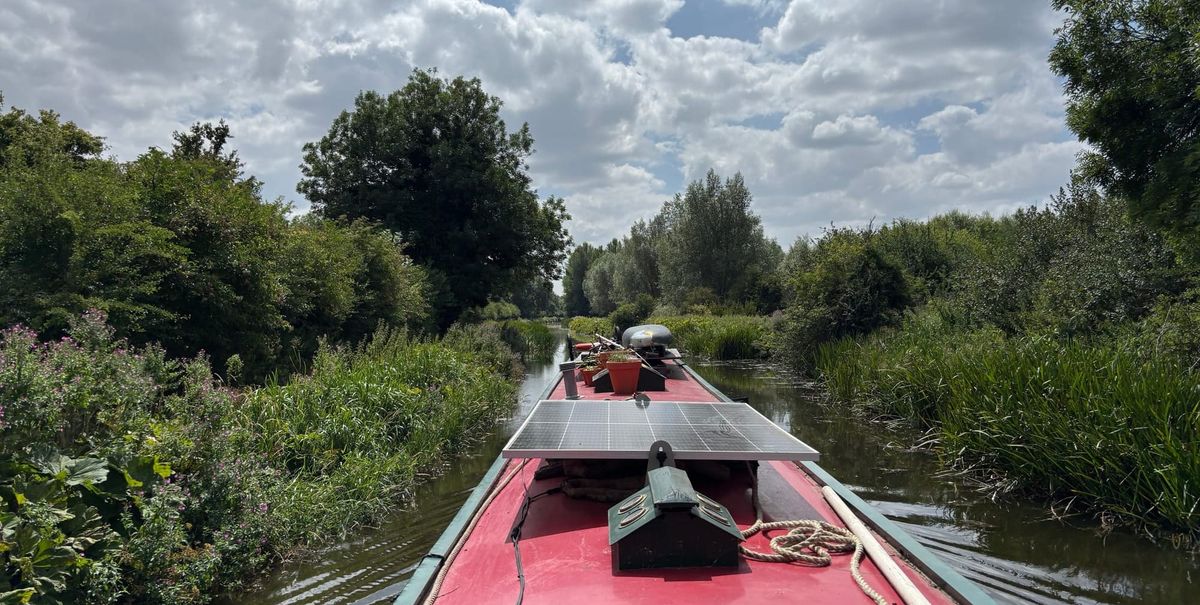
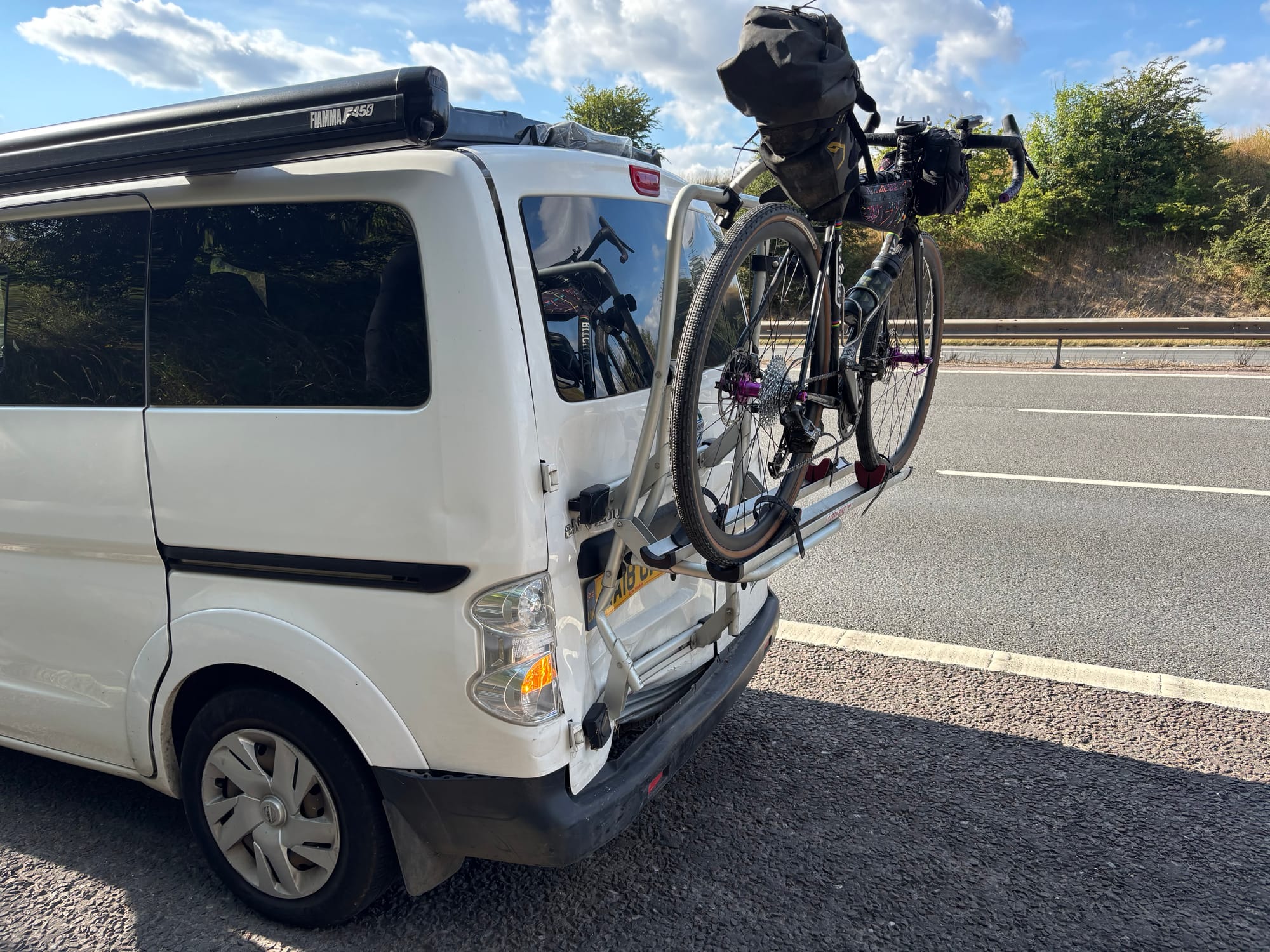
Last year the electric van I'd been living in for three years was destroyed in a crash on the motorway. Thankfully I'd just bought a canal boat, or I would be homeless.
 Phil Sturgeon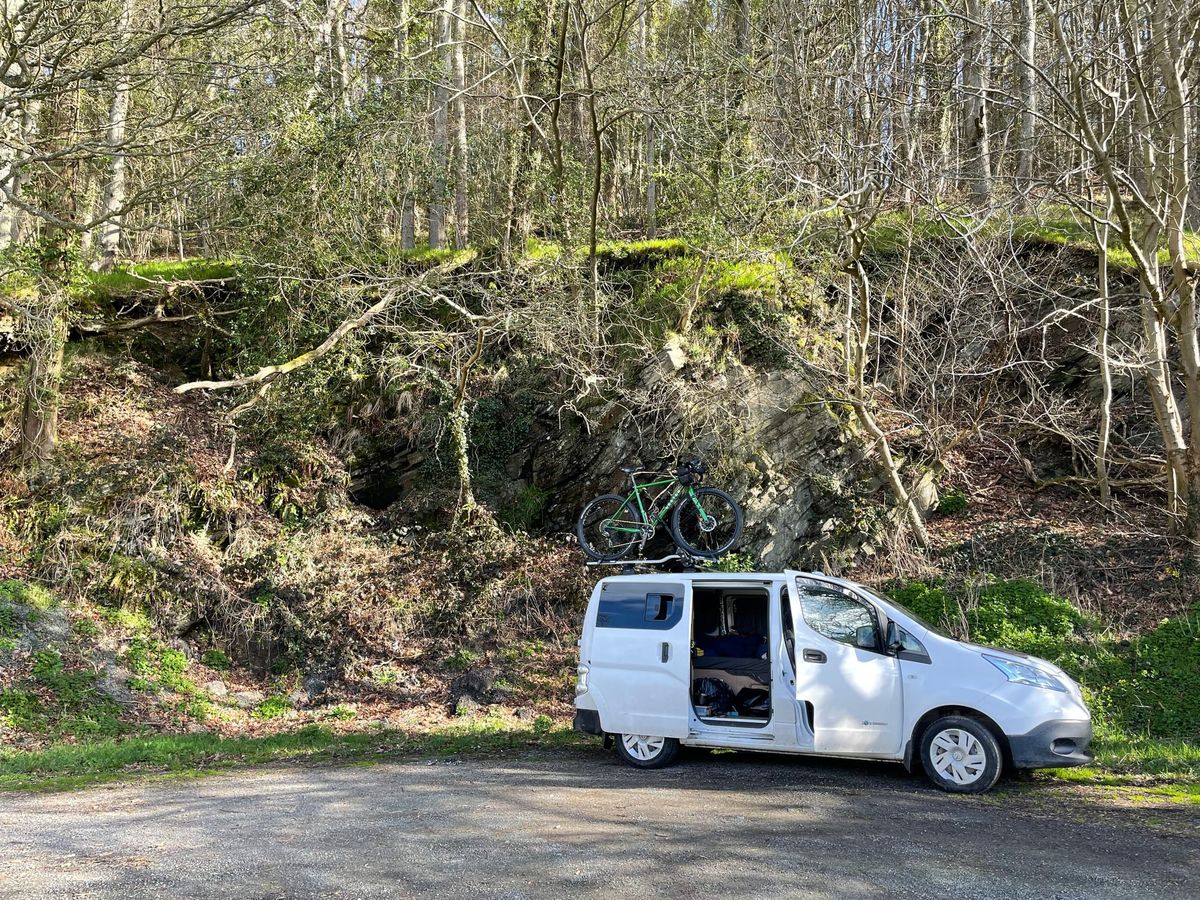
The crash was entirely their fault and I got plenty of insurance money (which for some reason kept going up beyond what I paid for the van in the first place.)
The money went into a bigger newer second-hand van which can go twice as far and charge twice as fast. Not a campervan, just a van I use for moving stuff around for Protect Earth, because my floating home is the only home I need, and I'd like to focus on that.
Why live on a canal boat
Running a charity unpaid and only stealing enough time for myself to do a smattering of client work for the last few clients who aren't pretending they can replace me with AI means there's not a huge amount of money floating around to waste on an overinflated bubble-priced house, even if the banks would trust me with a mortgage. Throwing all that money to the landlords isn't an option, and I'd never be able to afford ever escalating energy bills, and I'm not giving any council tax to Reform when they get in everywhere, so protecting myself from those costs and problems is critical.
Before I bought the Struggle Bus I was considering a canal boat, because living in nature and away from distractions of a confused and bitter world was always tempting. Sadly I remembered Protect Earth was in the business of buying land, not canals, so I got a van which would be able to park on the sites I was visiting and working on to keep charity costs down.
With my focus moving mainly towards Warleigh Nature Reserve on the River Avon near Bath, the ability to live on the canal often just a few minutes walk or ride from the site was too good to turn down. I've moored at Dundas Aqueduct for months at a time (Winter moorings and it's the middle of my cruising "circuit"). It's let me wander over for countless site meetings, volunteering days, and let me act as it's ranger. It's definitely the only way I could ever afford to live in that fancy valley.
More about the boat
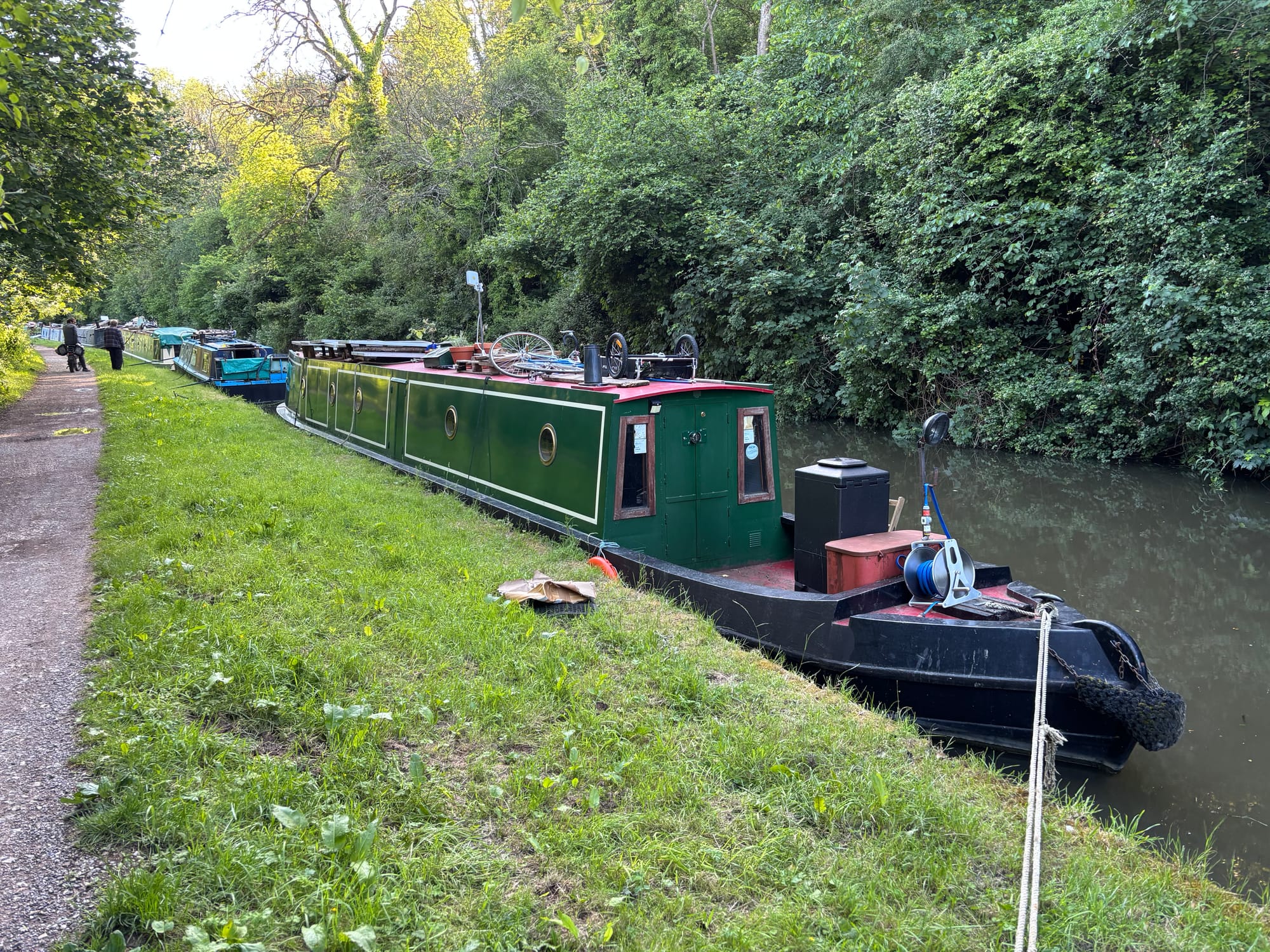
My new home is a 60 foot traditional narrowboat, built in 1991.
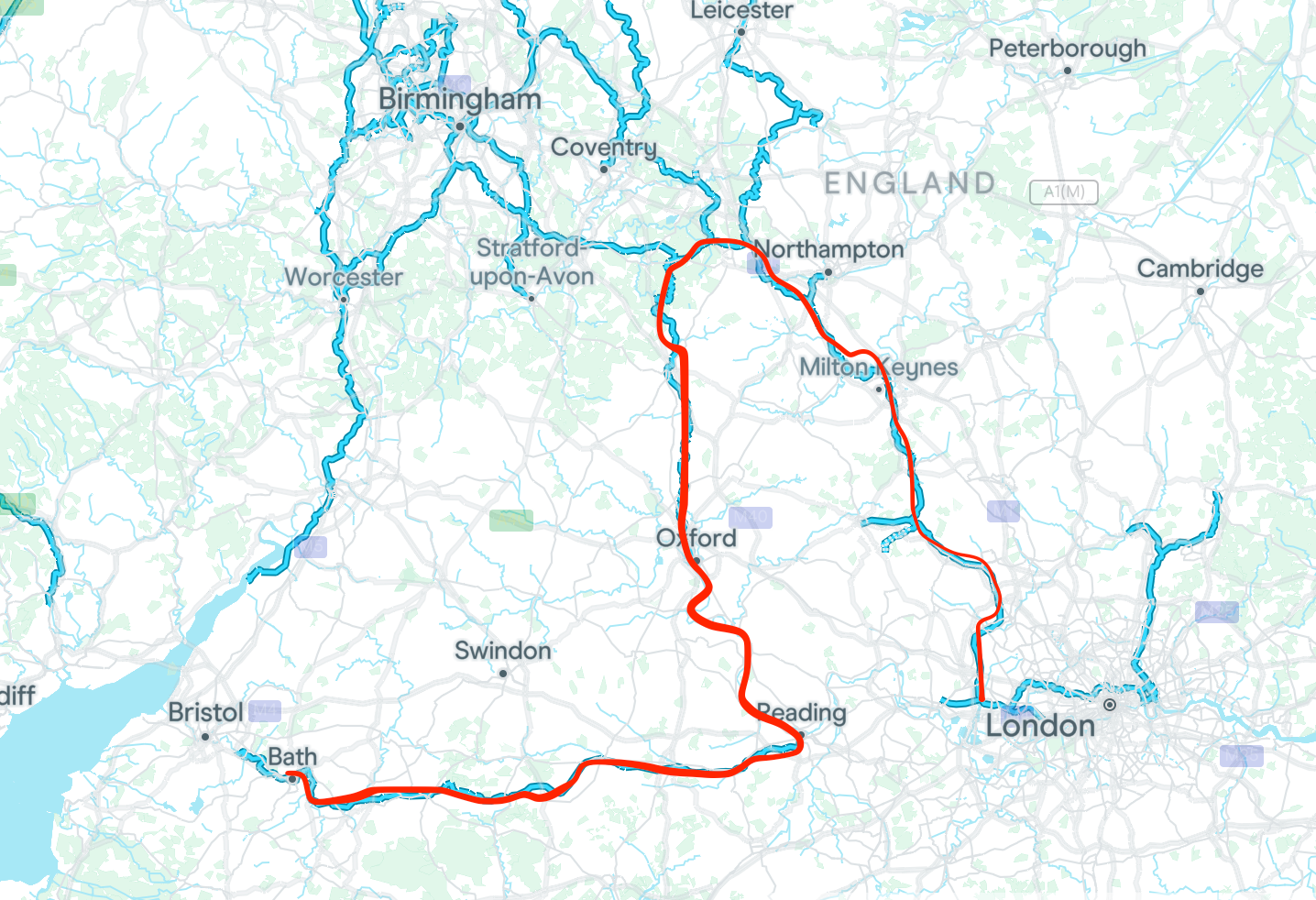
I bought it in Watford, then drove it up the Grand Union through Milton Keynes up to Daventry, then down the Oxford Canal to Oxford, followed the River Thames to Reading, and took the Kennet and Avon all the way home to Bath.
I didn't have a clue what I was doing at first, and Dad was remembering fast, but neither of us fancied putting it on the Thames going upriver in February with about 1 day of practice under our belt. The insurance companies seemed to agree. It took months, and those adventures will get their own posts, but I got to the end of it knowing exactly how to solo drive the boat, and after Caen Hill at Devizes there's nothing new to throw at me.
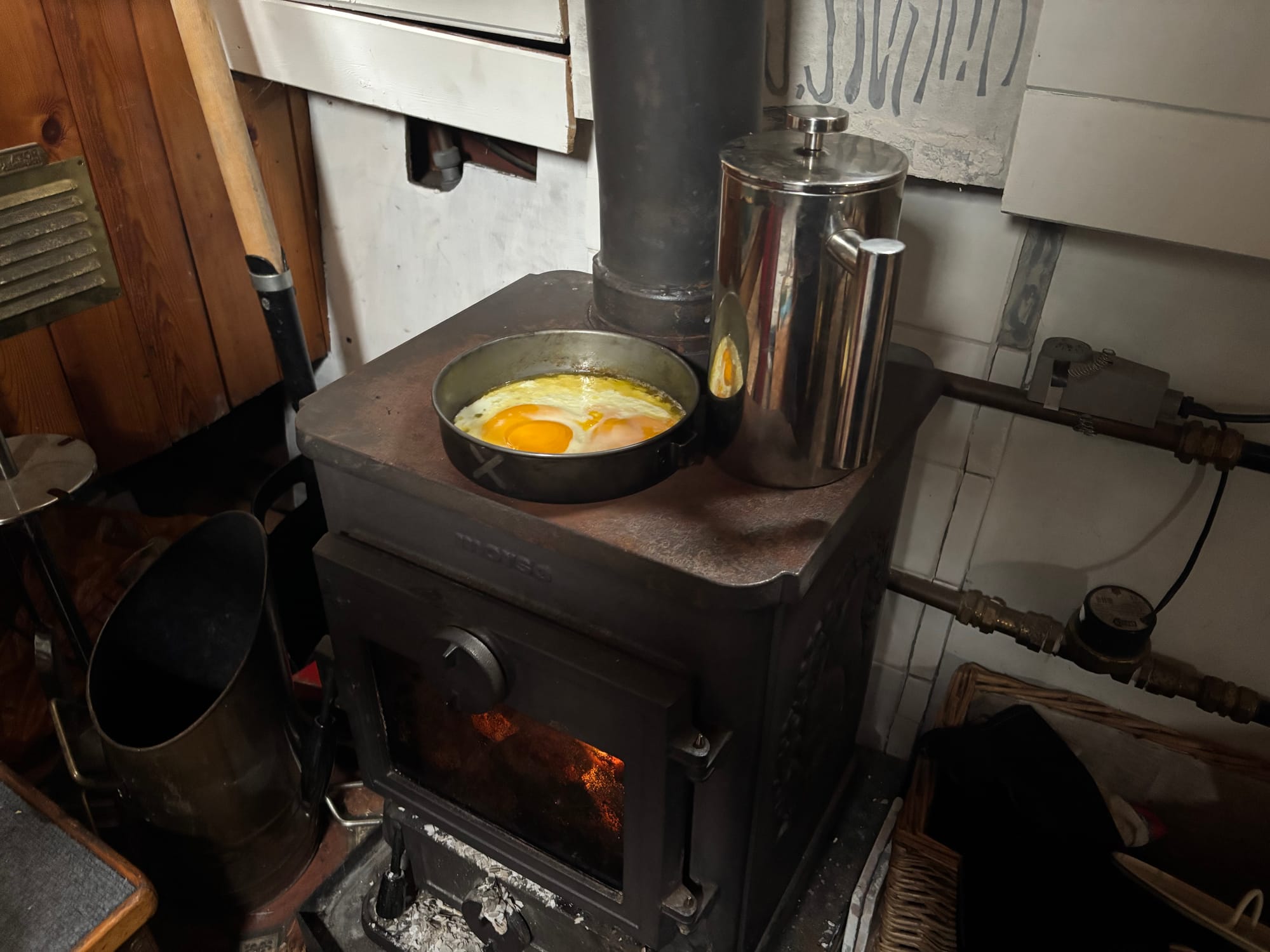
My boat has a diesel engine, shower/tap water is heated by gas, cooking was gas hobs/oven, air is heated by a wood stove with a backboiler, and everything else is electric from solar panels and a 12v alternator on the engine.
Going from being entirely fossil fuel free for years to having multiple fossil fuels has been a huge let down, but I've been considering it as a chance to research how most boaters live before I start trying to change everything. I've met lots of electric boaters, some with entirely electric propulsion, many with a diesel engine but electric everything else. The story is generally the same: it's easy in summer, hard in winter, with some needing a generator to get through the coldest months.
What's it like in winter
I've only had the one winter so far and it was horrendous, but not representative. All of my electronics were shot due to the batteries being absolute nonsense.
Canal boats are just like campervans in that they'll generally have a starter battery (usually lead acid) and leisure batteries (lithium or AGM/gel). Mine had three AGM batteries for leisure, and one massive lead acid battery (off of a truck?!) as a starter battery.
Clearly the giant truck battery was initially used as both, with lights, power sockets, fridge, etc. all running off the leisure battery. This is not ideal and it's easy to knacker the battery, so at some point the gel batteries were added to provide more longevity.
Both of these batteries needed to be charged, and with the options being 1) solar panels, and 2) alternator. You could hook the solar up to the leisure batteries and the alternator up to the starter battery, but then when you're driving for a long time and the starter is full, the leisure batteries aren't getting any power from the engine and that's not helpful in winter.
The best solution is to have two alternators, one charging the starter battery, another charging the leisure batteries. Then they're both getting charged when driving, and the solar going straight into the leisure batteries will help keep that topped up the best they can.
The folks that had my boat decided to do something much dumber: they used a battery sharer to turn all the batteries into one big battery! At first that might sound half smart, but sharing across battery chemistries is all sorts of bad ideas, and the effect of that was I spent all of last winter with either no electricity or very very unstable electricity, which meant no water and no pump for my backboiler which meant no heat in most of the boat other than right next to the stove which was now ROASTING hot as the heat was not being dissipated. This burned out my backboiler which now needs to be replaced.
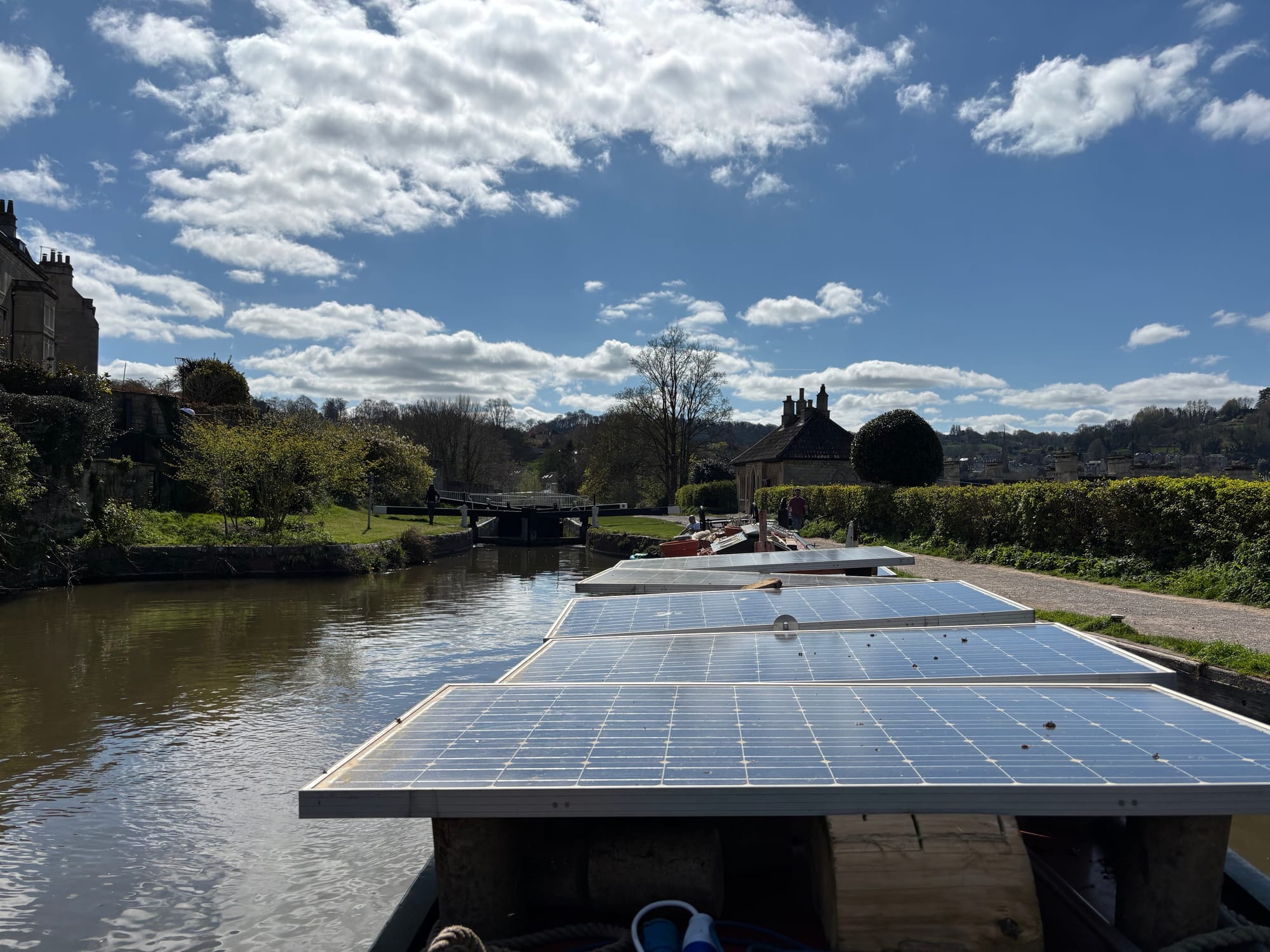
I upgraded my solar panels in September, going from one massive 250W panel to six second hand 187w panels that I got for free. In winter I was getting 500W a day, compared to 3,000 W in summer, and it's impossible to know if that's just because my batteries were fudge or if that's truly all they could achieve. We'll find out this winter.
Electric Upgrades
Everything electronic in the engine room has been upgraded. Batteries are up from 4kWh of gel to 12kWh of LiFePO₄ lithium batteries from Fogstar. The inverter is up from 1kW to 10kW, which is big enough to do some truly ridiculous things (like charge three cars at once for some reason).
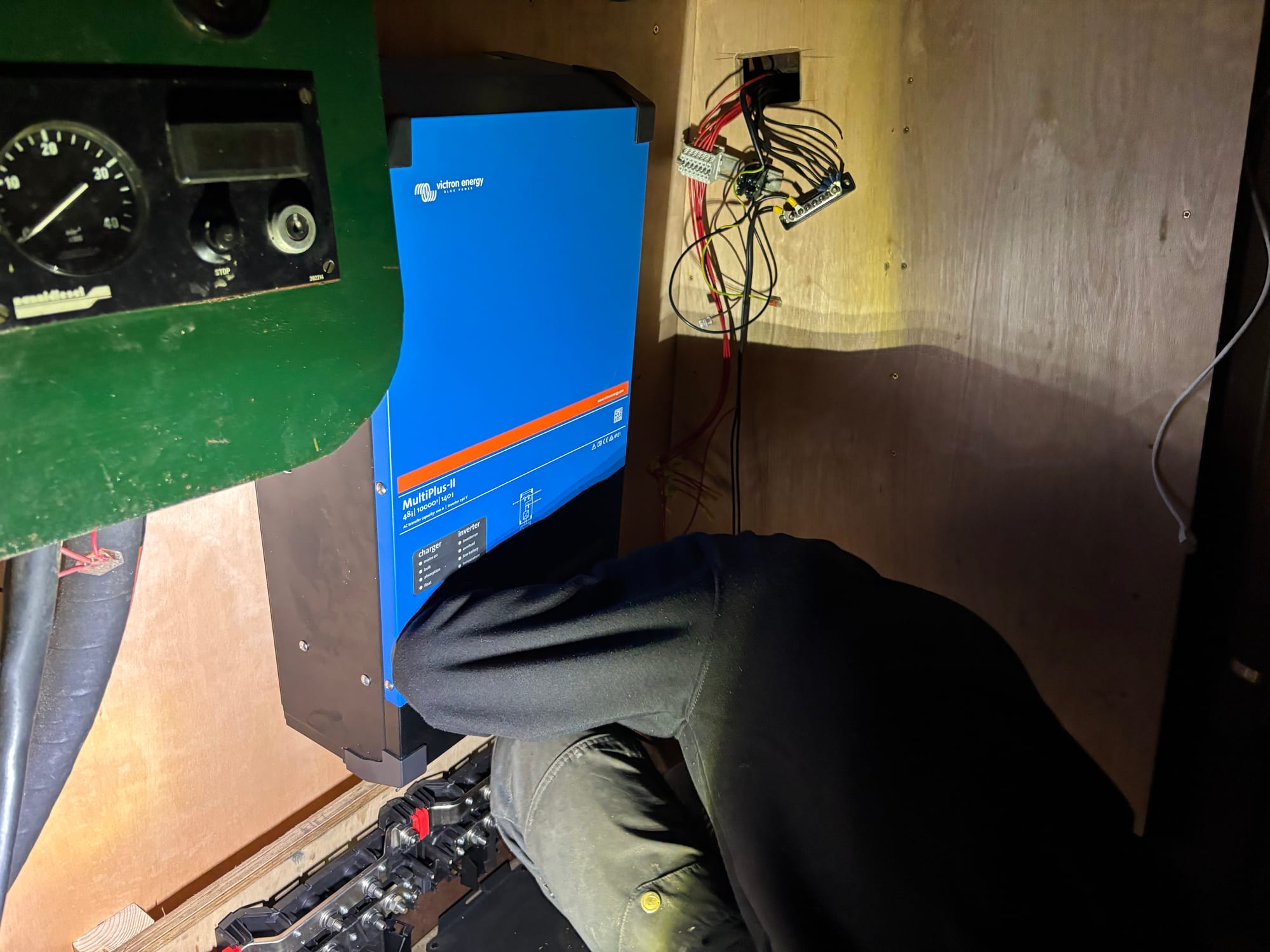
Moving everything over to 48v will help if I go for electric propulsion, but in the meantime it's giving lots of handy little benefits. The shoddy wiring throughout the front of the boat was giving enough voltage drop that all my lights were strobing out whenever we turned on more than one, because the light was not able to get the full 12v it needed. Javid, the genius behind most of the electronic work here, was able to configure the 48v to 12v step-down to send 13v up the boat, meaning that even with a volt-drop on the shoddy wiring, the lights still had the 12v they needed.
The rest of the boat will be upgraded and improved as general work happens, but getting the whole engine room tidied up and made sensible was bloody rewarding. There were loads of random cables dangling around going nowhere, a bilge pump with no switch so exposed wires were just jabbed onto the battery terminals (thanks for the fix Julian!), nothing was labelled, and most cables could be pulled out of their terminations without unscrewing them. Javid even noticed that the earth had never been attached. It was a few millimeters away so an attempt was made, but it was never attached to the block...
Removing gas as a priority
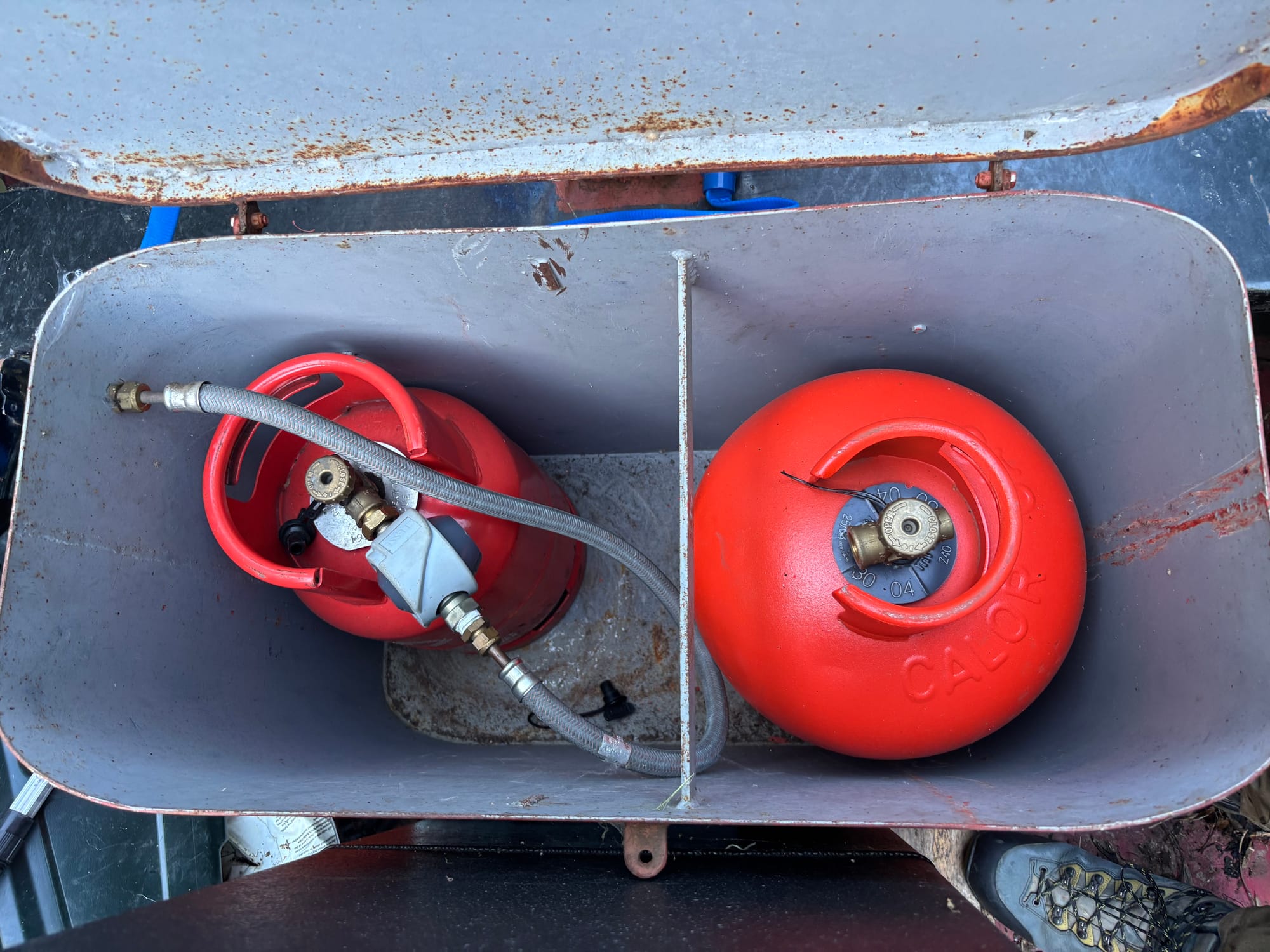
Extra capacity and output will allow me to ditch gas rapidly. The boat came with 13kg and 6kg propane gas bottles, which I have replaced both of once in the 18 months I've had the boat. That's the last of it for me, and I'm selling both bottles for £15 and £10 if you want them.
Once my batteries were sorted out I immediately stopped using the gas hob. My Vango Sizzle Double-hob has been working just fine for boiling water and cooking, so the gas oven is up for sale too.
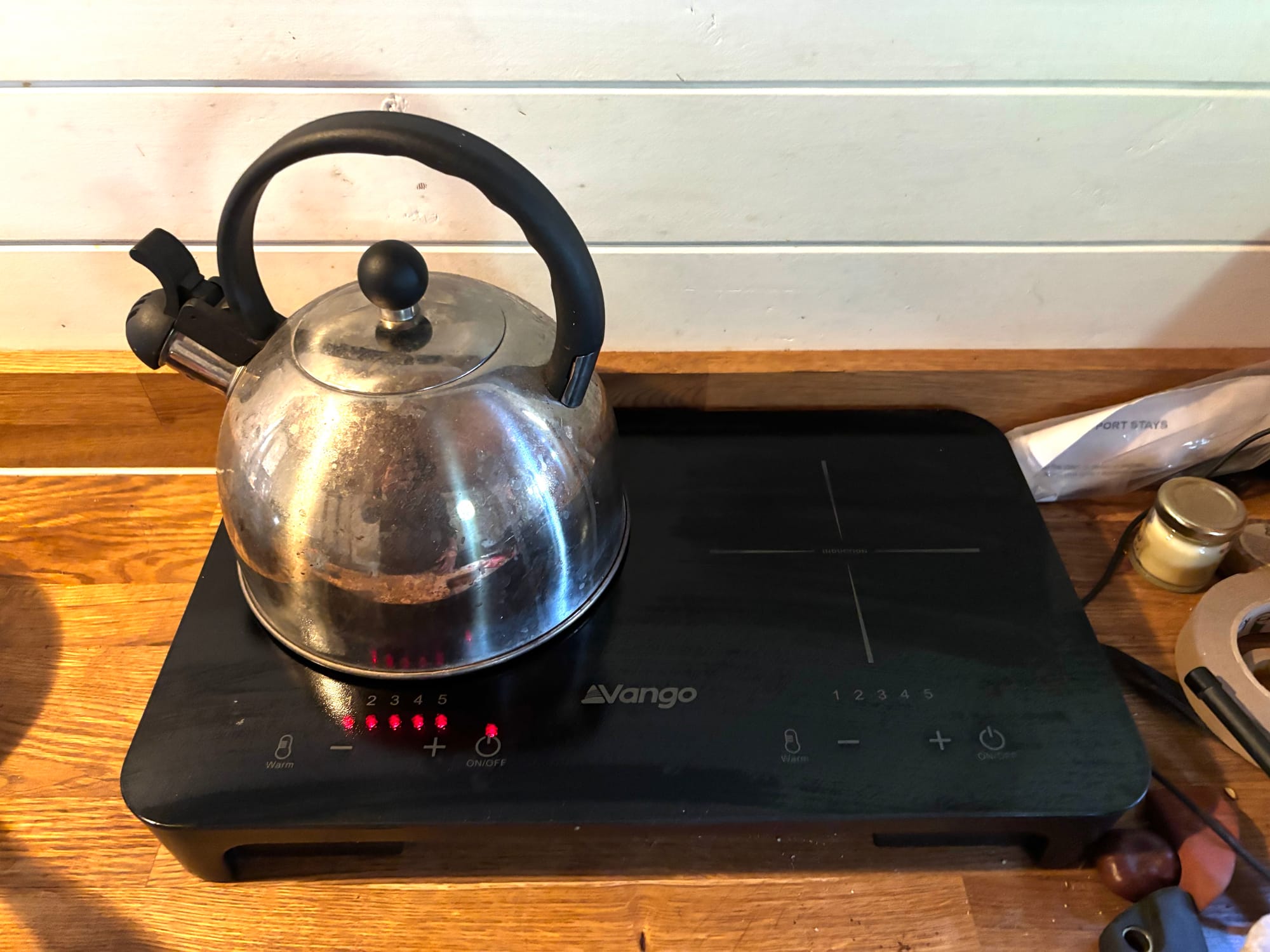
All I need is hot water for showers and a hot tap. I've got a few plans here which I'll be writing up specially, but basically it will be easy to make that all electric with an electric shower (£450) and a calorifier for hot tap water.
Ditching gas will reclaim some space on my bow, and help me not have to worry about gas leaks, as there have been a few issues with appliances leaking and me waking up feeling dizzy and more CO poisoned than I'd like. I could find and fix the leak, or I could ditch all of it entirely and just rely on more solar and a bit of diesel (soon biodiesel) where needed. One less fossil fuel to faff about with turning on and off, with pipes all over the place, complicating the safety certificate, and carting up and down the towpath when it needs replacing.
The best bits
Waking up surrounded by birds, getting to know the families, and seeing ducklings and goslings get bigger every day.
Kayaking to the pub and floating home picking up rubbish.
Ripping out invasive species all along the canals and nobody asking any questions about it.
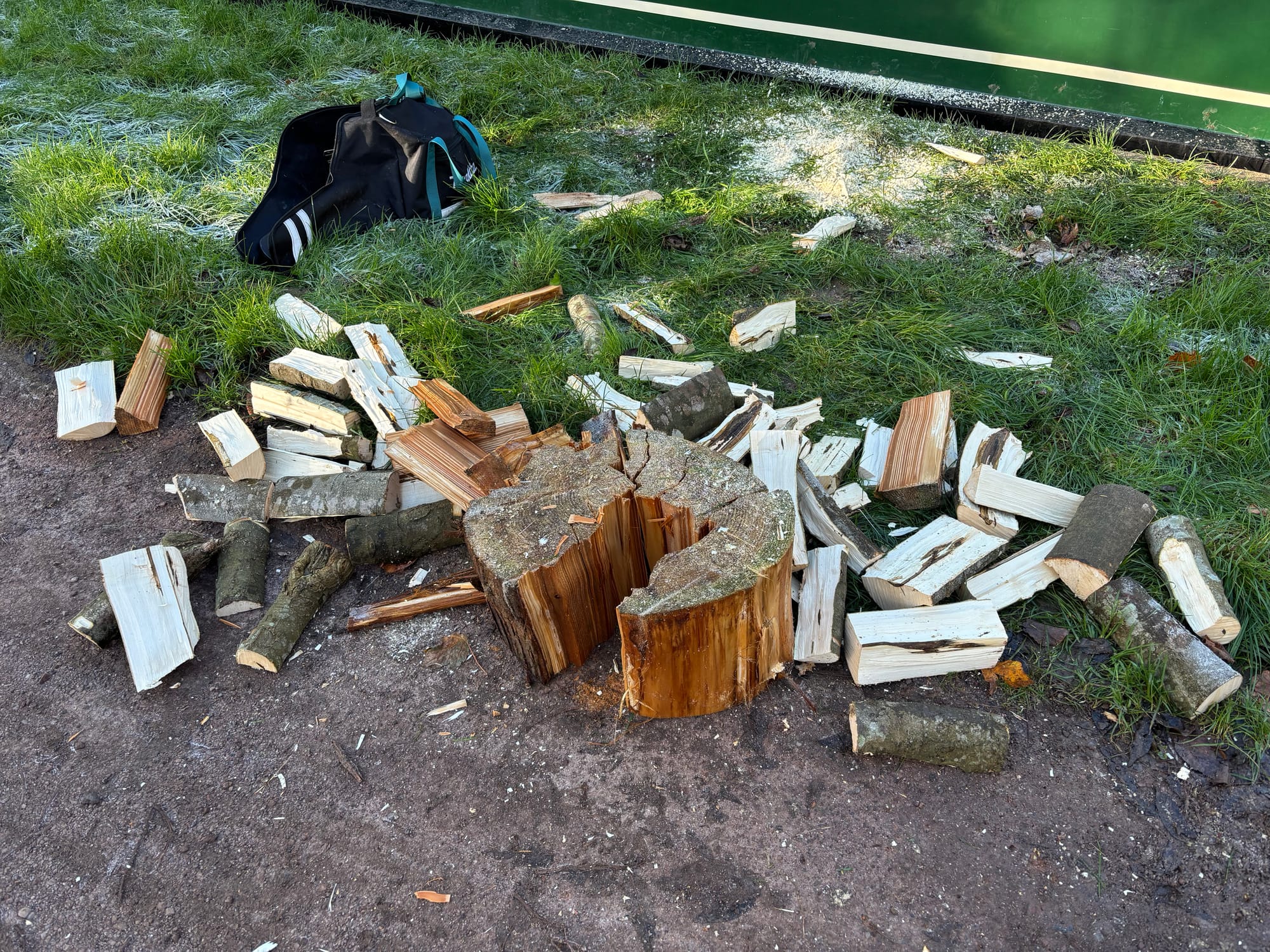
Splitting my own wood and foraging on the towpaths and surrounding woodlands so I don't need to go to the shops so often.
Having a shower means I can exercise more and wash afterwards. The USB-powered pump and bucket shower in the van never got used and I got fat and lazy. Next I need a washing machine.
Everything is a bike ride, run, or swim away, so I'm losing weight and returning to the shape I imagine myself to be.
Meeting amazing people every day. I've made new friends, hired a new coworker, and had people knock on my door and ask if I'd like to go for a bike ride for the first time in about 20 years.
Being back home I am surrounded by friends and family, my partner, my best friend, and I can easily walk/run/cycle to them instead of being stuck in the van all the time.
Never feeling trapped in a single place. I have to move every two weeks and there's a lot of different interesting places between Bradford on Avon and Bristol Harbour. Places that I've always visited but always had to leave to sleep. Now I live in them.
Work to be done
- Ditch gas.
- Upgrade the 4G modem router to 5G.
- Switch the external antenna from a short broom handle to a longer coppiced hazel pole.
- Improve insulation in bedroom and elsewhere, because in winter its freezing and in summer its 40°C.
- Paint the roof white to reflect more light away to keep things cool in summer.
- Upgrade the solar panels to larger, better, bifacial panels (which will harvest some of that reflected light to be even more efficient).
- Improve the roof garden and harvest more food from it.
- Add a calorifier (hot water tank) to harvest waste heat from the engine and turn it into usable hot water. It can also take electric input to act as a "solar dump" when batteries are full.
- Get my electric shower using that calorifier to lower electric requirements.
- Install a waste heat recovering system in the shower to lower energy requirements further.
There's lots to do, but I've got amazing people helping me, and it's all cheaper than giving all of my money to capitalist shitbags and parasitic landlords.